Carpet dyeing
Carpet dyeing that puts the color back instead of replacing the carpet
Bleach spots, sun-faded window strips and stripped pet stains, matched by eye and dyed back in.
Chapter 01
What fades or strips a carpet
Bleach is the fastest way to lose a patch of color. A drop of toilet cleaner, a splash of laundry bleach or a spilled drain product takes the dye out of the fibre, and the pale spot it leaves does not come back with cleaning because there is no stain left to lift.
Sun does the same thing slowly. In a Brooklyn parlour with tall windows, the strip of carpet along the glass fades while the rest of the room stays rich, and after a few seasons the line is obvious. Pet accidents can strip dye too, when the stain was acidic enough to pull color out with it.
Cleaning will not fix any of these, and neither will a rug laid on top forever. The color has to be put back into the fibre.
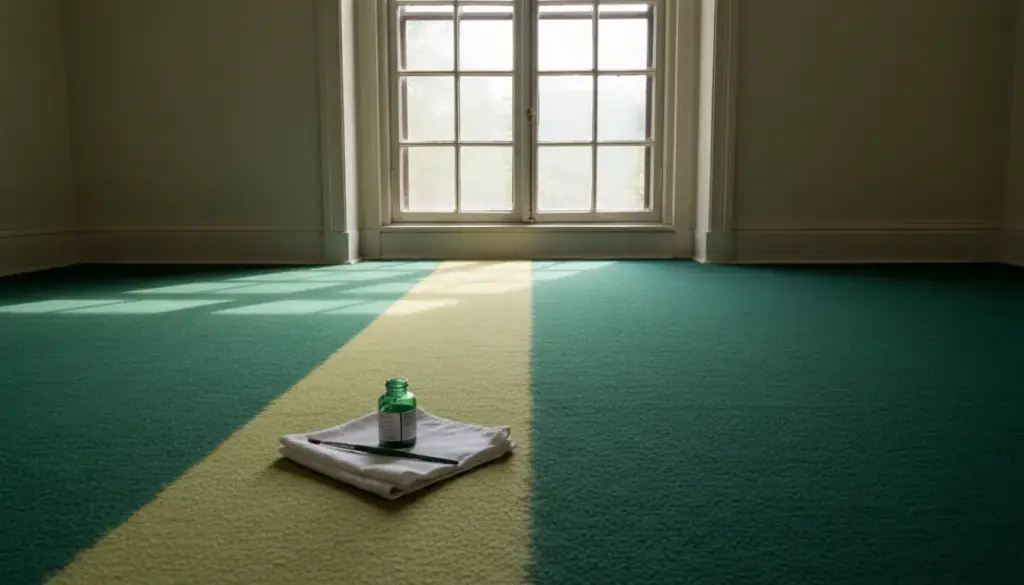
Deep green wool carpet with a sun-faded strip along the window and a dye bottle on a cloth
Spot dye or whole-carpet restoration
There are two ways to do it. Spot dyeing treats one patch: the dye is matched by eye to the surrounding fibre and worked in until the bleach spot or the faded strip disappears into the room. It is the right call when the rest of the carpet is still in good color.
Whole-carpet color restoration treats the entire floor, and is the better answer when sun fade has dulled the whole room or a stain was too big to hide with a spot repair. It evens everything out to one color.
The fibre decides what is possible. Wool and nylon take dye. Polyester does not. We check what the carpet is made of before promising anything, and we tell you straight if dye is not the answer.
Chapter 03
Why dyeing beats replacing
Replacing wall-to-wall carpet means tearing out the old, buying the new, and paying someone to stretch and trim it into every closet and stair. Dyeing the carpet you have avoids all of that, and ASAP says it can save up to 80 percent of the cost of replacement.
Call (888) 919-2393 and describe the mark: where it is, how big, and what caused it. Estimates are free, and we cover Brooklyn, Manhattan, Queens, Staten Island, the Bronx, Long Island and Westchester.
80%
Up to 80 percent of the cost of replacement can be saved by dyeing
Check the fibre before the dye
Wool
Takes dye well. The color is matched by eye to the surrounding pile.
Nylon
Takes dye well, so it is the usual candidate for whole-carpet color restoration.
Polyester
Does not take dye, so a faded or bleached patch needs a different answer.
Clean first, dye second
Dye goes on best over a clean pile, so wall-to-wall carpet cleaning usually comes first. A faded rug is a different job, and an unraveling edge belongs to rug repair. Describe the mark through the contact page.