Mold remediation
Mold remediation, from the damp source out
Contain it, remove what can't be cleaned, clean what stays, dry the area, and deal with the moisture that started it.
Chapter 01
Where mold starts in Brooklyn homes
Mold needs moisture and time, not much else. In Brooklyn that usually means a damp basement or cellar, the back of a dresser pushed against an outside wall, a cabinet under a leaking sink, or any room that took on water and wasn't dried properly.
A dark patch you can see is often only the surface of something bigger. Behind it the drywall, the baseboard or the carpet pad may be wet all the way through, which is why we look at the moisture before we look at the stain.
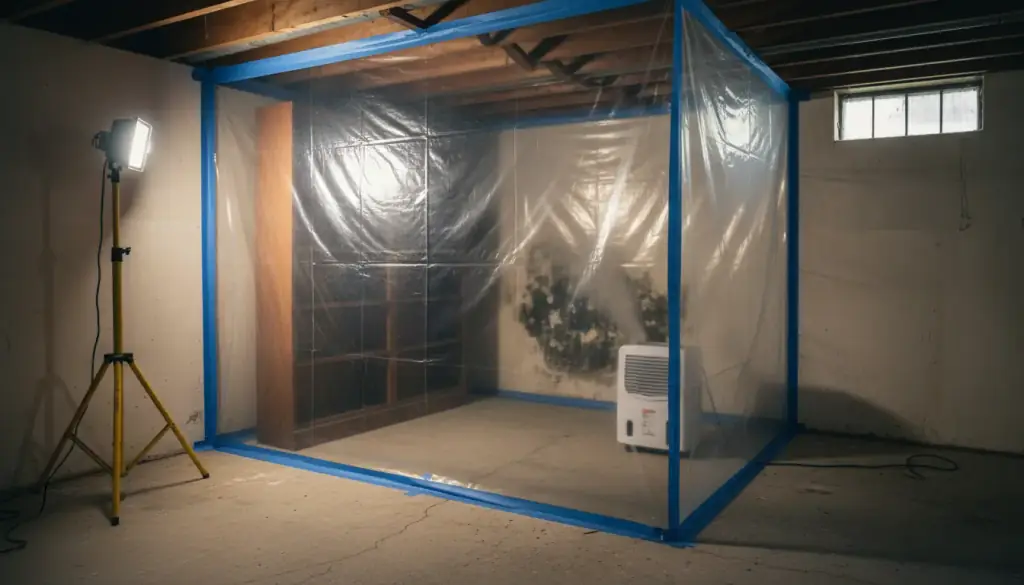
Basement corner sealed in clear plastic sheeting with blue tape, dark mildew on the lower wall and a dehumidifier running beside a work light
Contain, remove, clean, dry
Containment comes first. We seal the work area in plastic sheeting taped at the edges, so the spores we disturb don't drift into the bedrooms and the hallway while we work.
Then comes removal. Porous material that has gone through, like a soaked carpet pad or soft drywall, can't be cleaned and gets cut out. Surfaces that stay, such as framing and concrete, are cleaned. Painting over a patch or wiping it with bleach does not fix it, because the growth is rooted in what is behind the paint.
Last, the area is dried with dehumidifiers and air movers until the readings say it is dry. A cleaned surface that goes back to being damp will grow again.
Chapter 03
Stopping it from coming back
Removal only holds if the moisture source is fixed. A leaking pipe, a failed window seal or water running toward the foundation has to be dealt with, or the same wall will be dark again next season.
Humidity matters too. A dehumidifier in a basement, a bathroom fan that actually vents, and furniture pulled a few inches off outside walls all keep the air moving. Call (888) 919-2393 and we'll tell you what we see across Brooklyn, Manhattan, Queens, Staten Island, the Bronx, Long Island or Westchester. Estimates are free.
Where is the damp coming from?
Six places we check first. If the damp started with a flood, our water damage restoration work covers the drying, and rooms that need it afterward get disinfecting. Not sure what you're looking at? Send the details or call (888) 919-2393.
- 01
Basement walls and slab
Cellars hold moisture, and a dark band along the bottom of a wall usually means it has been damp a while.
- 02
Behind sofas and dressers
Furniture pushed flat against an outside wall stops air moving, and the paint behind it stays cool and damp.
- 03
Under kitchen and bathroom sinks
A slow drip at a fitting wets the cabinet floor for months before anyone looks.
- 04
Around windows and window wells
Leaks at the frame run down inside the wall and show up as staining low on the plaster.
- 05
Ceilings under a bath or roof leak
Brown rings and soft paint mean water has already been through the drywall.
- 06
Carpet pad after a flood
A pad that stayed wet is the most common hidden source, and the surface of the carpet can look fine.