Rug repair
Rug repair on the bench: fringe, shearing, resizing and moths
Frayed ends, unwinding edges, uneven pile and moth grazing, fixed by hand and delivered with the clean rug.
Chapter 01
What fails first on a rug
Fringe goes first. It is the exposed end of the rug's own foundation, so it takes every vacuum pass, every dragged chair and every pet that likes to chew. Once it frays back to the first row of knots, the knots themselves can start to let go.
Edges come next. The long side edge, called the selvedge, is wrapped yarn holding the pile in place, and when the wrap wears through the edge unwinds a few inches at a time. A rug on a busy hallway floor shows it early.
The third failure is the quiet one. Moths graze the wool in dark corners and under furniture, leaving bare patches long before anyone moves the sofa to look. We see all three on Brooklyn rugs, and all three are fixable if the rug comes in before the damage travels.
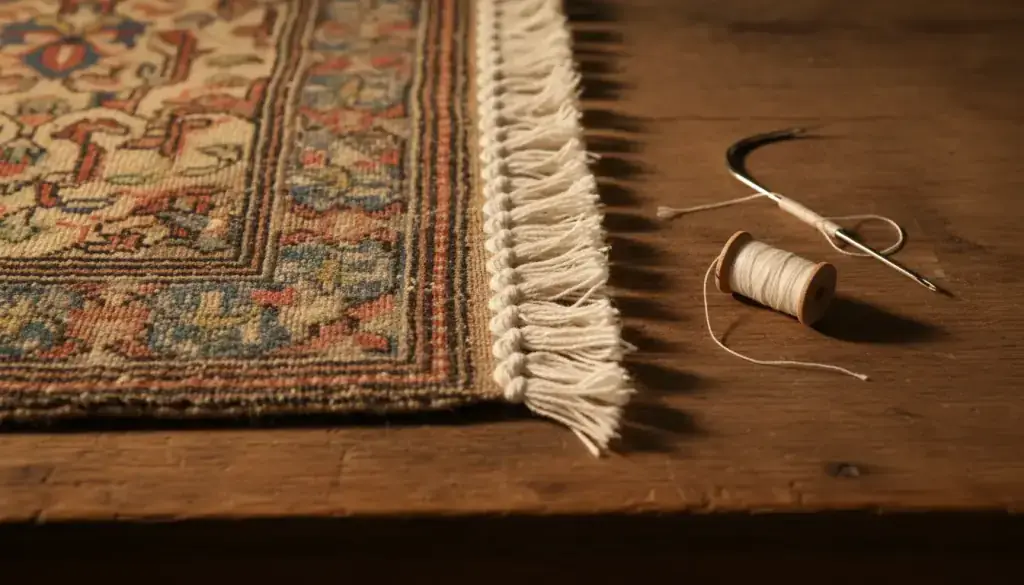
Oriental rug end on a wooden bench with cotton fringe, a curved needle and a spool of thread
The bench work
Repairs are done by hand at the bench. Refringing means working new cotton fringe into the end and securing it so it holds. Binding wraps the selvedge back into a firm edge. Shearing trims the pile to one even height, which hides the line between worn wool and healthy wool.
Resizing is for the rug that is simply too big. We cut it down to the room, then bind the new edge so it will not unravel. Free pickup and delivery apply here too, so the rug leaves the apartment rolled and comes back finished.
Call (888) 919-2393 and describe what you see: where the fringe is gone, how far the edge has unwound, how big the bare patch is. The estimate is free.
Chapter 03
Moth removal and storing a rug properly
Moth larvae live in dark, undisturbed wool, which is why they favor the corner under the bookcase and the stretch of rug beneath a sofa. They eat the pile and leave the backing, so the damage looks like a bald patch with the foundation still showing.
Removal means cleaning the rug so the larvae and their casings are out, treating it, and then storing or laying it properly. A rug that is rolled and kept in a breathable wrap, away from damp, is much harder for moths to settle in than one folded in a plastic bag in a closet.
Once the rug is clean and repaired, we send free maintenance tips on how to keep it that way. Moving furniture a little each season and vacuuming under it does more than any treatment.
Rug repair, on the bench
Four repairs, one bench
Fringe repair
The fringe is frayed, thin or gone at one end. New fringe is worked in and the end is secured so it stops unravelling.
Edge binding
The side edge, the selvedge, is unwinding. It is rebound so the rug stops losing knots along the edge.
Shearing
The pile is uneven after wear or moth grazing. It is trimmed back to one height so the surface reads as a whole.
Resizing
The rug is too big for the room. It is cut down and bound so it fits the floor it is going on.
Repair and wash in one trip
A repaired rug goes back down clean when the rug cleaning happens on the same pickup. The carpet it sits on can follow with wall-to-wall carpet cleaning, and the damage can be described to us through the contact page.