What to Do in the First Hour After a Basement Flood
The first hour sets how bad the damage gets. Here is what to do, in order, and what to leave alone.
October 27, 2026 · 3 min read
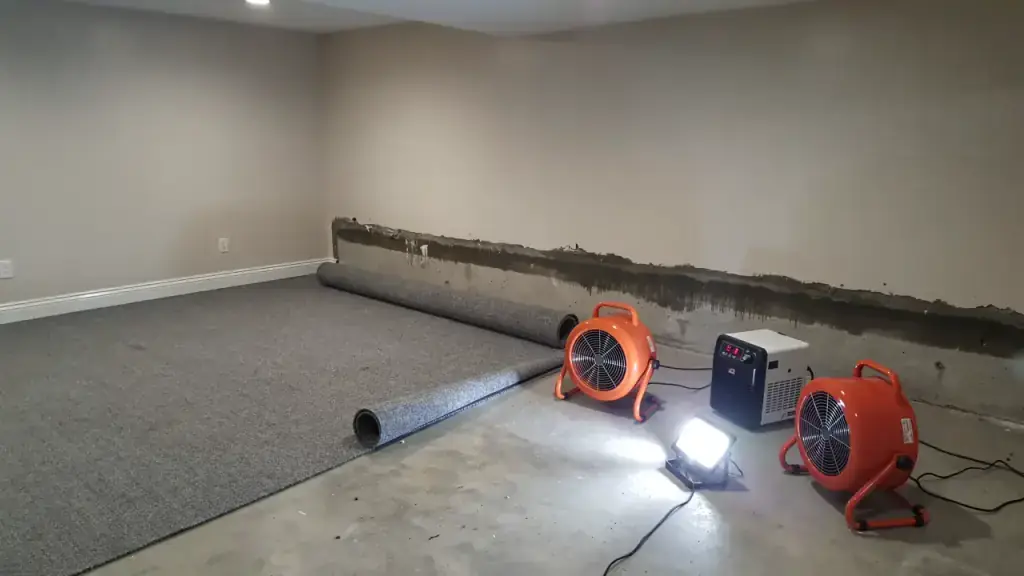
A basement flood in Brooklyn can come from a burst pipe, a failed sump pump, a heavy storm that overwhelms a drain or a backed-up sewer line. Whatever the cause, the first hour matters most. Water moves into everything it touches, so the aim is to get safe, stop more water coming in and slow the damage until help arrives.
1. Think about the power first
Water and electricity do not mix. If the water is anywhere near outlets, appliances or your electrical panel, do not walk into it. If you can reach the panel while standing in a dry spot, shut off the power to the basement. If you cannot reach it safely, stay out and call an electrician or your utility. Never use a household vacuum on standing water or plug anything in while the floor is wet.
2. Stop the water if you can
If a pipe has burst or a fixture is leaking, close the shutoff valve for that line, or the main valve for the building. If the water is coming from a storm or the drain, you may not be able to stop it, and that is fine: focus on keeping yourself and your belongings out of it. If it appears to be sewage, treat it as contaminated. Keep children and pets away, do not touch it with bare hands and tell the restoration team on the phone.
3. Take photos for your own records
Before you move anything, photograph the water line on the walls, the carpet, the furniture and anything else that is damaged. Take a few wide shots and some close ones, and write down the time. You will have a clear record if you decide to make an insurance claim, and it also helps the restoration team understand what happened.
4. Get furniture off the wet carpet
Lift what you can safely carry onto dry ground or onto blocks. Wooden legs left on wet carpet leave stains that do not come out, and upholstery will wick water upward. Pull out rugs, books, boxes and electronics. Do not try to move anything heavy or anything sitting in deep water. That is how backs get hurt.
5. Leave the wet carpet in place
It is tempting to start pulling the carpet up. Please do not. Wet carpet is very heavy, the tack strips along the edge are sharp, and handled wrongly the carpet can tear or the floor can be damaged. A restoration team will check what can be dried in place and what must go, and removing it too early can make the job harder.
Why the pad and the walls matter
The carpet is only the surface. The pad underneath is a foam or fibre sponge that holds water long after the top feels dry, and the concrete below keeps that moisture in. Drywall does the same thing in a different way: it draws water up from the floor, often higher than the visible water line, and the damp can sit behind the baseboard where you cannot see it. If any of that stays wet, odors and mold can follow. That is why proper drying uses air movers and dehumidifiers and not a fan and a towel.
What not to do
- Do not run a household vacuum on water.
- Do not wait to see whether it dries by itself.
- Do not carry wet, dirty items upstairs onto dry carpet. Set them down on plastic or in the yard first.
- Do not skip the photos. They are much harder to take once everything has been moved.
Call early
Call a water restoration line as soon as you are safe. Ours, (888) 919-2393, is open 24/7, including nights and weekends, and we serve Brooklyn, Manhattan, Queens, Staten Island, the Bronx, Long Island and Westchester. Tell us what you can see, where the water came from and how long it has been there. If you have a rough idea of how many rooms are affected, say so, because it helps us plan what to bring. Keep the lights off if the switches are wet, use a flashlight, and stay on the phone until you know what happens next. The sooner drying starts, the less has to be replaced. Our water damage page is at water damage restoration.
ASAP Carpet Cleaners, (888) 919-2393
Call (888) 919-2393More articles
Which Types of Carpet Are Easiest to Clean
Fibre and pile style decide how easily a carpet gives up dirt, and how it handles a spill.
How to Clean Vomit From Carpet and Get Rid of the Smell for Good
Remove it quickly, keep the water cold and do not scrub. Here is the order that works.